


What is Oktoberfest?
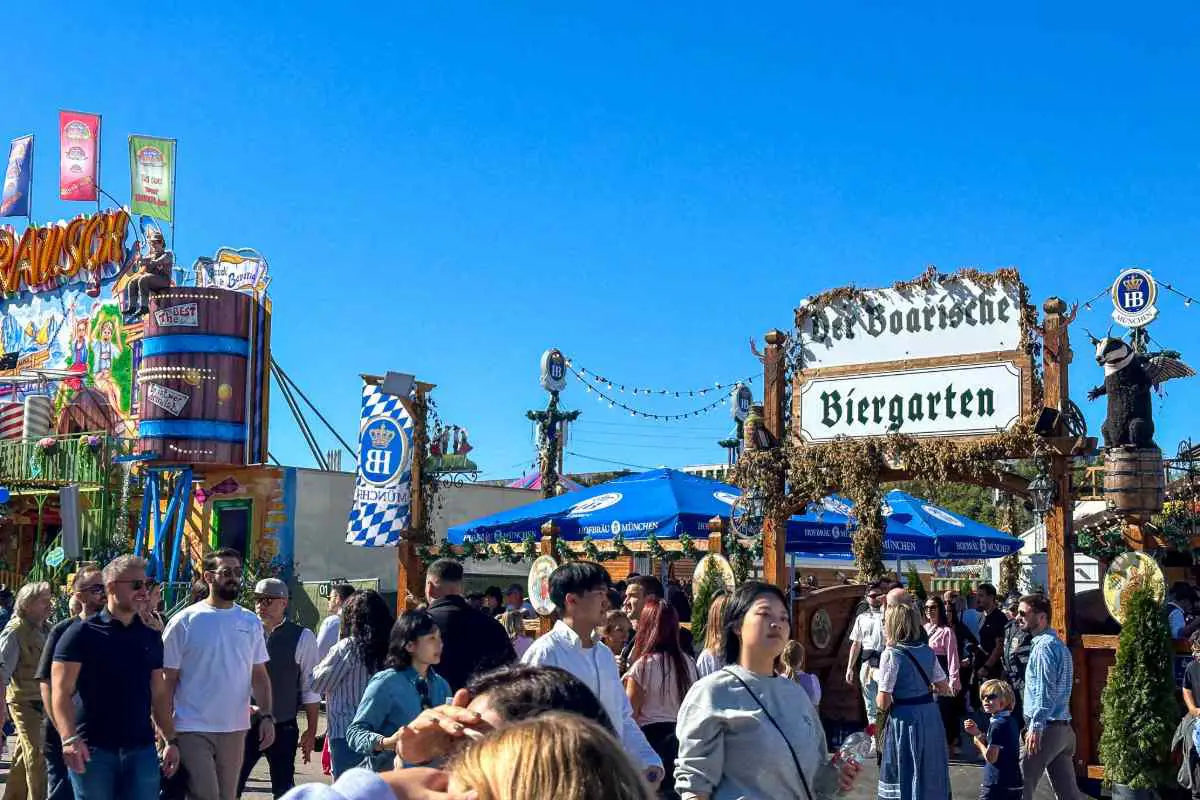
Oktoberfest is one of Germany's best-known tourist events and the world's largest beer and folk festival. Held in Munich and drawing around six million visitors each year, the three-week event takes place every October, hence the name Oktoberfest. The festival runs every day from late September to early October, serving beer, traditional food, and folk culture. Visitors are encouraged to wear traditional folk outfits, Lederhosen and Dirndls, and the event takes place in a designated area of Munich, just west of the city centre, where the fairground comes alive and tents fill with jolly people.
As one of Europe's largest festivals, I wanted to see what the festival organisers are doing to promote sustainability and reduce waste, and this is what I discovered.
What is the festival doing to consider sustainability?
As a festival that attracts hundreds of thousands of visitors each year, sustainability matters because of the sheer volume of people and the festival's global popularity. During my weekend visit, I noticed several initiatives the festival is taking to be more sustainable and reduce its impact on the city.
No single-use items
One thing that stood out was how little, if any, single-use plastic I saw across the festival. As the festival focused on drinking beer and eating delicious traditional meals, it could have generated a lot of waste in the form of cups, cutlery, and disposable food packaging.
But what surprised me was how little of this waste I saw, since everything I came across was reusable. In the beer tents and beer halls, drinks were served in glass steins, and food was served on plates alongside cutlery you would find in restaurants. Tables had no single-use napkins, sauce sachets, or salt and pepper sachets, which encouraged people to ask for them rather than use them just because they were there.
From my perspective, the festival seems to be doing what it can to reduce single-use items, from serving drinking water and soft drinks in glasses to encouraging reusable items to avoid unnecessary waste.
Reduce, reuse approach.
As a festival that has existed for decades, organisers can easily take a reduce-and-reuse approach. Many smaller or new festivals are investing in reusable plastic cups, which is a great initiative; however, I really liked that Oktoberfest used glass and sturdier crockery and cutlery that will last for decades longer. While reusable plastic cups are better than single-use plastic, I am not sure they are the most sustainable option compared with something that could last a lifetime.
This also applied to water fountains, which appear throughout the complex and encourage visitors to bring reusable water bottles and avoid buying plastic bottled water. An estimated 150,000 litres of water were drunk from the water fountains at the 2026 Oktoberfest, helping cut potential plastic waste.
How to plan a trip to Oktoberfest: Tips and tricks
Getting there
As one of Germany's largest festivals, getting to Oktoberfest can be challenging because of the crowds, but Germany has great public transport, so green travellers have several options.
Munich is well connected to Europe's train system, so you can avoid flying and travel to Oktoberfest by land. The city also has good infrastructure for electric vehicles if you're driving with friends or family on a road trip.
Once you are in the city, the U-Bahn is a fantastic way to get around efficiently; even during Oktoberfest, when crowds are large, it's still a practical mode of transport. Electric trams also run across the city, adding another green way to get around.
Accommdoation
Munich has several accommodation options, from hotels to guest houses, B&Bs, and hostels. Most people stay in the centre or close to the festival so they can walk, but that also means you are in the heart of the action. If you want a more relaxed experience, you can stay away from the festival and use public transport to get there.
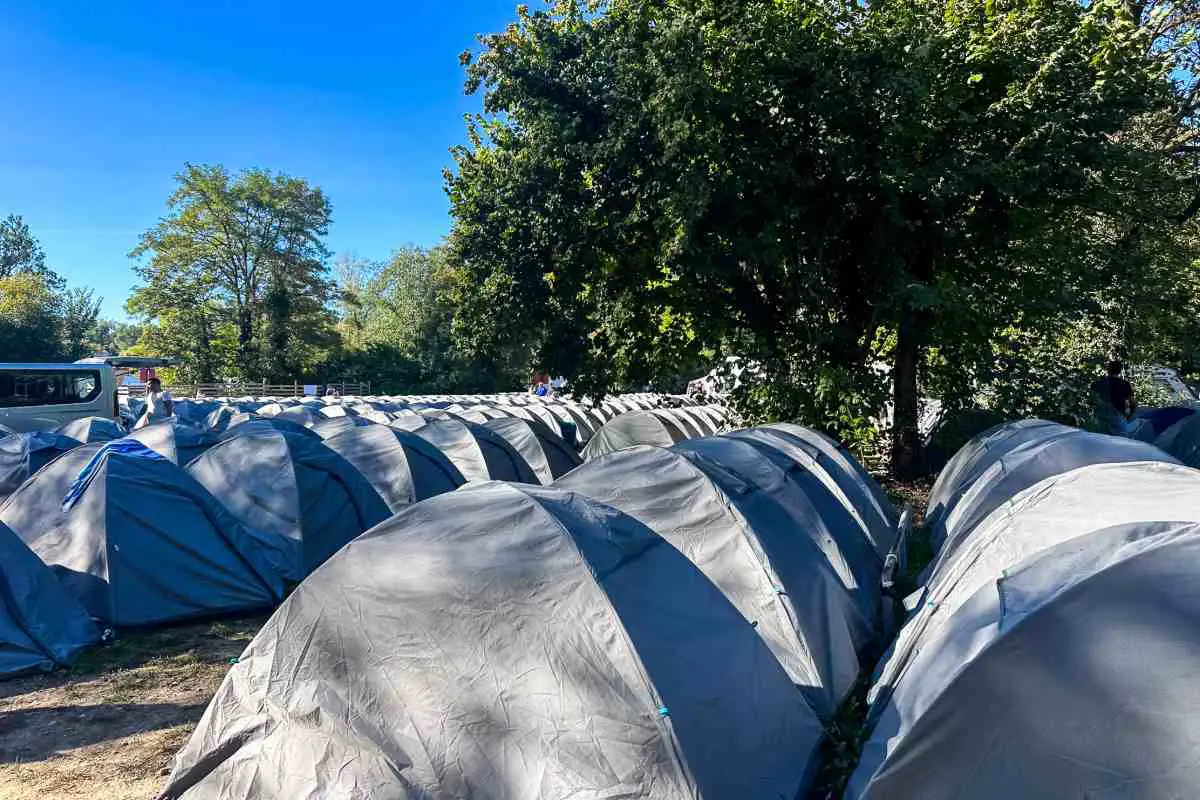
I prefer to travel on a smaller budget, so I decided to try one of the Oktoberfest pop-up campgrounds. Located about a 15- to 25-minute journey from Oktoberfest, it was a great place to stay during the festival.
Several companies have taken the initiative to reserve large areas of the municipal campground to set up tents with all the equipment visitors need to turn up camp and leave simply. I thought this was an interesting concept, as many festivals across Europe have produced a large amount of waste from visitors leaving tents and camping equipment in recent years. This is mostly because it breaks during their stay, gets dirty, or they simply don't have the energy to take it down and take it home. This wasteful mindset creates unnecessary rubbish that festival organisers usually have to dismantle and dispose of.
I thought the idea of a pre-set campground was a great way to reduce waste from camping equipment. As a visitor, it was very easy because I didn't have to set up my tent, and it was almost like showing up at a hotel or Airbnb where everything was ready for me. It was, of course, not the best night's sleep, as many people stumble back to their tents in the early hours, but I think several festivals across Europe could learn from this concept to reduce waste.
The Festival and What to Expect
The festival is known worldwide for beer, but it's more than that. It celebrates traditional Bavarian culture, keeping folk celebrations alive while bringing people together. The festival grounds offer a great selection of fairground rides and small games, similar to what you would see at most fairgrounds in Europe. Entrance to the festival grounds is free, but you often have to queue, and security checks bags on entry.
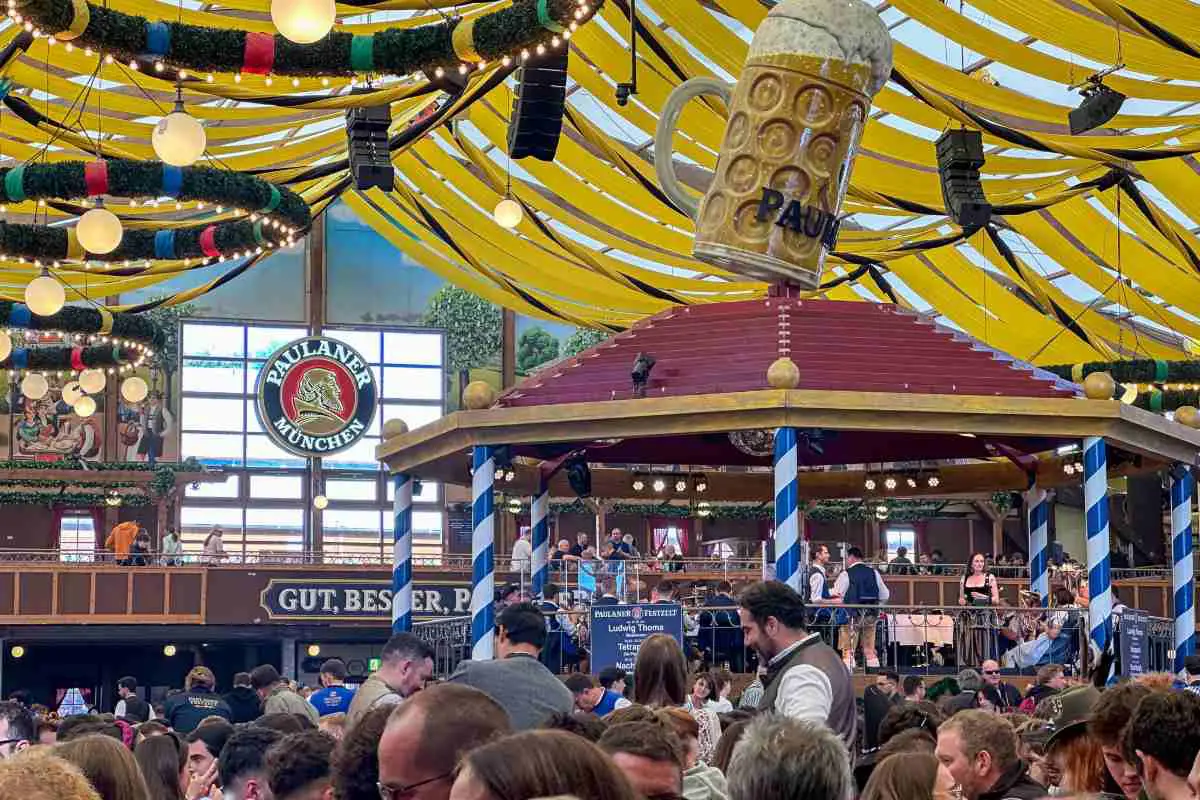
Once inside, you can explore freely, shop for souvenirs or outfits, and enjoy fast food. Most people head to the beer tents, where the action is, from live music to singing and dancing on tables; it is the heart of the festival. But getting in isn't always easy.
Usually, tables book out a year or so in advance, so if you are thinking of going next year, start planning early. Tables are booked for groups of 10, and the amount paid usually goes toward food and drink. Be aware that some people might try to sell you wristbands for their spot in the tent, and they often charge more than they originally paid, so be careful if you choose to do this, as it isn't always a legitimate way to get into a tent.
I didn't book in advance, but I went early one Saturday morning to try my luck, and many reservations started at 11.00, so I could sit at any of these tables until then. I arrived around 09.00, and the fairground area was very busy, but I went to the Paulaner tent, ordered beer and food, and listened to the band. Even in the morning, the atmosphere is lively, and in my experience it's also more pleasant than later on the day when the rowdy crowds arrive.
The festival is a good place to try regional dishes such as pretzels, goulash and dumplings. There's a good selection of fast food, from bratwurst to cheese plates and more, but it might be challenging for vegans.
Is it worth it?
I do think Oktoberfest is worth visiting at least once in your life, especially if you drink beer and are interested in traditional culture. Still, it is a little overpriced and very touristy. I suggest visiting a smaller local celebration in villages across the region for a more authentic experience, or just spending 1-2 days at Oktoberfest.
So if you are interested in going to Oktoberfest, grab your friends and start planning your trip.
Sustainable tourism involves travelling in ways that minimise environmental impact while supporting local communities and preserving cultural heritage. This includes choosing eco-friendly accommodation, reducing waste, respecting wildlife, using public transport, supporting local businesses, conserving water and energy, and following responsible travel guidelines at your destination.
Travelling sustainably doesn't have to be expensive. Choosing trains or coaches instead of flights, staying in locally owned accommodation, travelling during the off-season, using public transport, carrying reusable water bottles and shopping bags, and eating at local restaurants can often save money while reducing your carbon footprint.
Yes, electric vehicles (EVs) generally produce lower greenhouse gas emissions than petrol or diesel cars, especially when charged using renewable electricity. While long road trips may require additional charging stops, improved charging infrastructure is making EV travel increasingly practical and environmentally friendly.
Walking and cycling are the most environmentally friendly ways to travel because they produce virtually no carbon emissions. For longer journeys, trains are generally the most sustainable option, followed by coaches and buses. If flying is unavoidable, choose direct flights, fly economy, and consider offsetting your emissions through certified carbon offset programmes.
In many cases, driving can produce fewer emissions than flying, particularly if you're travelling with several passengers in one vehicle. However, trains are often the most environmentally friendly option for short and medium-distance journeys. Whenever possible, compare transport options before booking to find the most sustainable choice.
You can calculate your travel carbon footprint using online carbon footprint calculators. These tools estimate your emissions based on factors such as your mode of transport, travel distance, accommodation, and activities. Many calculators also allow you to compare different travel options, helping you make more sustainable choices before you book.
The first step to tackling emissions that can't be fully avoided is to cut down as much as possible by making thoughtful choices, such as opting for low-carbon transport options or staying in environmentally friendly accommodation. Once you have reduced your emissions as much as possible, you can offset the remaining amount by contributing to initiatives such as reforestation efforts or renewable energy projects.
For offsets to make a real difference, they must be additional, permanent and properly verified. This ensures they contribute to real, measurable change. Exploreo plays a part in this by planting trees and supporting projects that curb emissions and benefit local communities.